
GLP-1 Side Effects: What's Normal, What Helps, and When to Call Your Provider
The short answer: Most GLP-1 side effects are digestive, mild to moderate, and temporary. Nausea, constipation, and fatigue are most common in the first one to four weeks after starting or increasing a dose, then usually fade as your body adjusts. Eating smaller meals, prioritizing protein and water, and slowing your dose escalation with your provider solve most of it. A small set of symptoms, like severe abdominal pain, persistent vomiting, or signs of dehydration, are not "normal" and warrant a same-day call to your provider.
Here's the honest, evidence-informed rundown of what to expect, what to do about it, and how to tell the difference between an adjustment week and a real problem.
Why do GLP-1s cause side effects in the first place?
GLP-1 medications like semaglutide and tirzepatide work by mimicking a hormone your gut already makes. That hormone tells your brain you're full, slows how quickly your stomach empties, and helps regulate blood sugar. Those same three actions explain almost every common side effect. Slower stomach emptying is why food can sit heavier than usual and why a normal-sized dinner suddenly feels like too much. Reduced appetite is why some people forget to eat and drink enough, which drives fatigue and headaches. And your gut simply needs time to recalibrate, which is why symptoms cluster around dose changes rather than continuing forever.
If you're new to how these medications work, start with What Are GLP-1s? A Beginner's Guide and come back.
The most common GLP-1 side effects, by the numbers
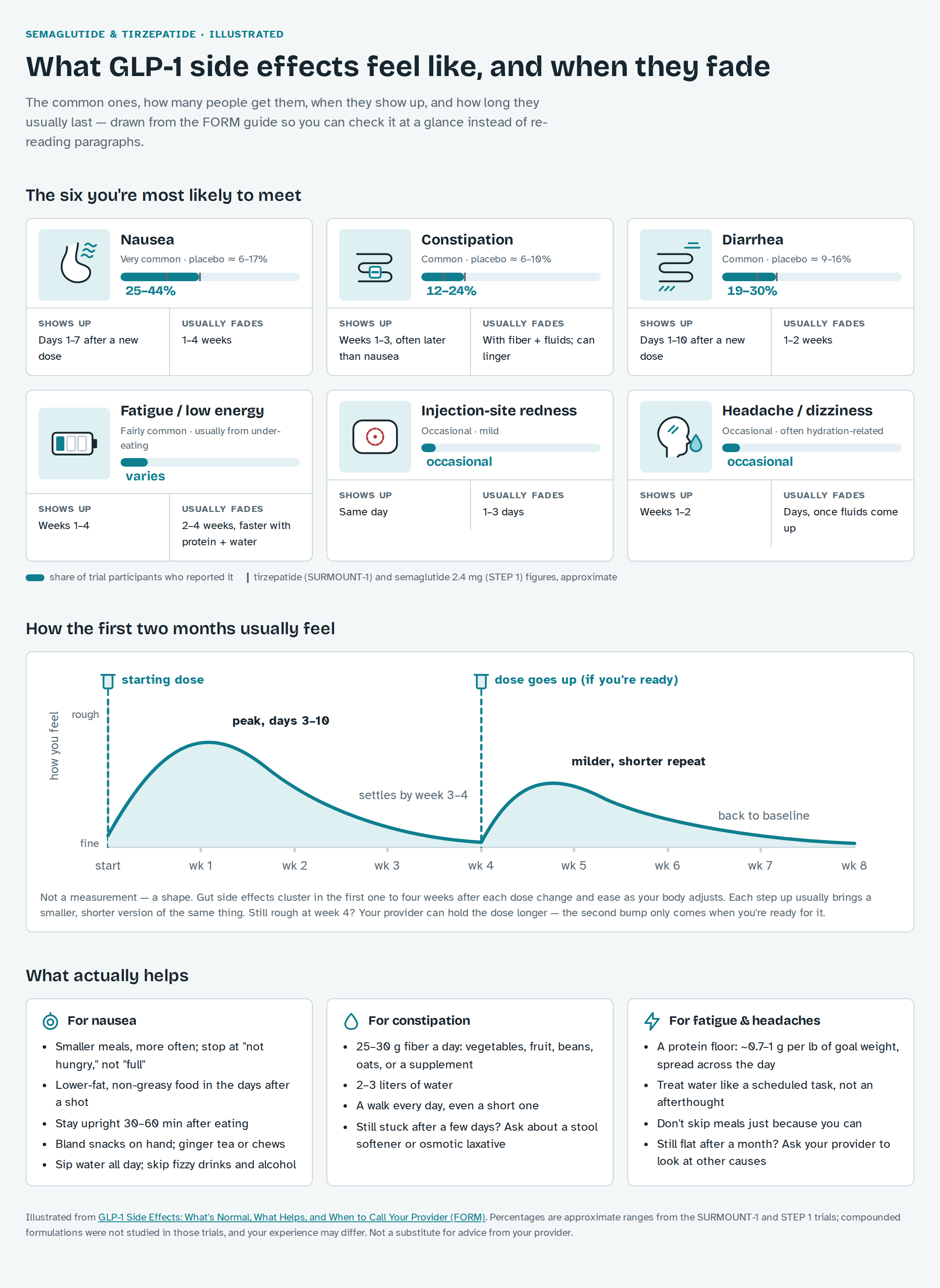
Clinical trial data gives a useful baseline for what "common" actually means. In the SURMOUNT-1 trial of tirzepatide, roughly 25 to 33 percent of participants reported nausea, compared with about 6 percent on placebo; diarrhea affected roughly 19 to 23 percent, and constipation about 12 to 17 percent. In the STEP 1 trial of semaglutide 2.4 mg, nausea was reported by about 44 percent of participants versus 17 percent on placebo, with diarrhea and constipation each in the 24 to 30 percent range. In both trials, the large majority of gastrointestinal events were rated mild or moderate, and only about 4 to 7 percent of participants stopped treatment because of side effects.
Two takeaways matter more than the exact numbers. First, side effects are common enough that you should plan for them rather than be surprised by them. Second, they are rarely severe enough to stop treatment, especially with provider-guided dosing that moves at your pace rather than a fixed calendar.
How long do GLP-1 side effects last?
For most people, the pattern is predictable: symptoms peak in the first week or two after starting or stepping up a dose, then noticeably improve by week three or four. Then the next dose increase resets the clock, usually with a milder version of the same symptoms. That's why a standard titration schedule spaces increases four weeks apart, and why FORM providers may hold you at a dose longer if you're still adjusting. There's no prize for reaching the highest dose fastest. Steady progress on a dose you tolerate beats stalled progress on one you don't.
What actually helps with GLP-1 nausea
Nausea on a GLP-1 is almost always a portion and timing problem, not a food problem. The fixes that consistently work are simple. Eat smaller meals more often instead of two or three large ones, and stop eating at "no longer hungry" rather than "full," because full now arrives sooner than your habits expect. Choose lower-fat, less greasy meals in the days after an injection, since fat slows stomach emptying further. Stay upright for 30 to 60 minutes after eating. Keep something bland on hand, like crackers, toast, or broth, for days when appetite is low but an empty stomach makes nausea worse. Ginger tea or ginger chews help many people. Sip water throughout the day rather than drinking a lot at once, and avoid carbonated drinks and alcohol while you're adjusting.
If nausea is still interfering with eating or daily life after a week, tell your provider. Options include staying at your current dose longer, adjusting injection timing, or, when appropriate, a short course of an anti-nausea medication. That's a conversation, not a failure.
Constipation: the side effect nobody warns you about
Constipation tends to show up a little later than nausea and to stick around longer, because eating less naturally means less fiber and less fluid moving through your system. The three-part fix is fiber, fluid, and movement: aim for 25 to 30 grams of fiber a day from vegetables, fruit, beans, oats, or a supplement; drink at least two to three liters of water; and walk daily, even briefly. If that isn't enough after a few days, your provider can recommend an over-the-counter stool softener or osmotic laxative. Persistent constipation is one of the most fixable GLP-1 side effects, and there's no reason to tough it out.
Fatigue, headaches, and "GLP-1 brain fog"
Low energy in the first weeks is real, but it's rarely caused by the medication directly. It's usually caused by what the medication makes easy to skip: calories, protein, water, and electrolytes. When appetite drops sharply, it's possible to go a full day on a few hundred calories without noticing. Set a protein floor of roughly 0.7 to 1 gram per pound of goal body weight, spread across the day, and treat water like a scheduled task. This also protects the lean muscle you want to keep while losing fat, which is why FORM pairs metabolic care with support like B12 in the FORM Metabolic Duo. If fatigue persists beyond a month despite eating and hydrating well, ask your provider to look at other causes.
When to call your provider (and when to seek urgent care)
The side effects above are expected. The following are not, and they warrant a same-day message to your provider: vomiting that lasts more than 24 hours or prevents you from keeping fluids down; signs of dehydration such as dizziness on standing, very dark urine, or a racing heart; nausea or constipation that hasn't improved after two to three weeks at the same dose; or any symptom that makes you want to stop treatment. Seek urgent or emergency care for severe, persistent abdominal pain (especially pain that radiates to your back, which can signal pancreatitis), pain in the upper right abdomen with fever or yellowing of the skin or eyes (possible gallbladder issues), a lump or swelling in the neck, trouble swallowing, or persistent hoarseness. GLP-1 medications carry a boxed warning regarding thyroid C-cell tumors observed in animal studies, and are not appropriate for people with a personal or family history of medullary thyroid carcinoma or MEN 2.
How provider-guided care makes side effects easier
The single biggest lever for tolerability is dosing that responds to you. At FORM, every path starts with a private online intake and an independent review by a licensed provider, who determines whether treatment is appropriate and how to pace it. Ongoing check-ins mean you're never guessing whether a symptom is normal or whether to hold a dose, and adjustments happen in days rather than at your next annual appointment. Both tirzepatide and semaglutide paths are available, and your provider can help you decide which fits your history and tolerance.
Provider-guided GLP-1 care with FORM by GBY starts at $99 for your first month, available in 48 states and Washington, D.C.
Frequently asked questions
Do GLP-1 side effects go away? For most people, yes. Digestive side effects peak in the first one to four weeks after starting or increasing a dose and then improve as the body adjusts. Each dose increase may bring a milder, shorter repeat.
Which has fewer side effects, semaglutide or tirzepatide? Head-to-head data is limited, but in their respective trials, tirzepatide reported somewhat lower rates of nausea and vomiting than semaglutide 2.4 mg. Individual tolerance varies, and your provider can help you choose based on your history.
Does nausea mean the medication is working? No. Side effects are not a reliable sign of effectiveness, and people who have no nausea can lose just as much weight. Weight loss comes from the medication's effect on appetite and metabolism, not from feeling unwell.
Can I take something over the counter for nausea or constipation? Often, yes, but check with your provider first. Ginger, small bland meals, and hydration are first-line for nausea; fiber, fluids, and an osmotic laxative are common for constipation. Your provider can recommend specific options.
Should I skip a dose if I feel sick? Don't change your schedule without talking to your provider. Holding at a lower dose for longer is often a better solution than skipping, and your provider can adjust your plan quickly.
Will I lose muscle on a GLP-1? Some lean mass loss is normal with any significant weight loss. Eating enough protein, resistance training two to three times a week, and provider-guided pacing help protect muscle.
FORM by GBY provides access to licensed providers who independently evaluate whether treatment is appropriate. Compounded medications are not FDA-approved and have not been evaluated for safety, effectiveness, or quality by the FDA. Individual results vary. This article is for educational purposes and is not a substitute for personalized medical advice.